OpenFront Team Games
Spawn on the same color, split front and back, and donate on the cooldown.
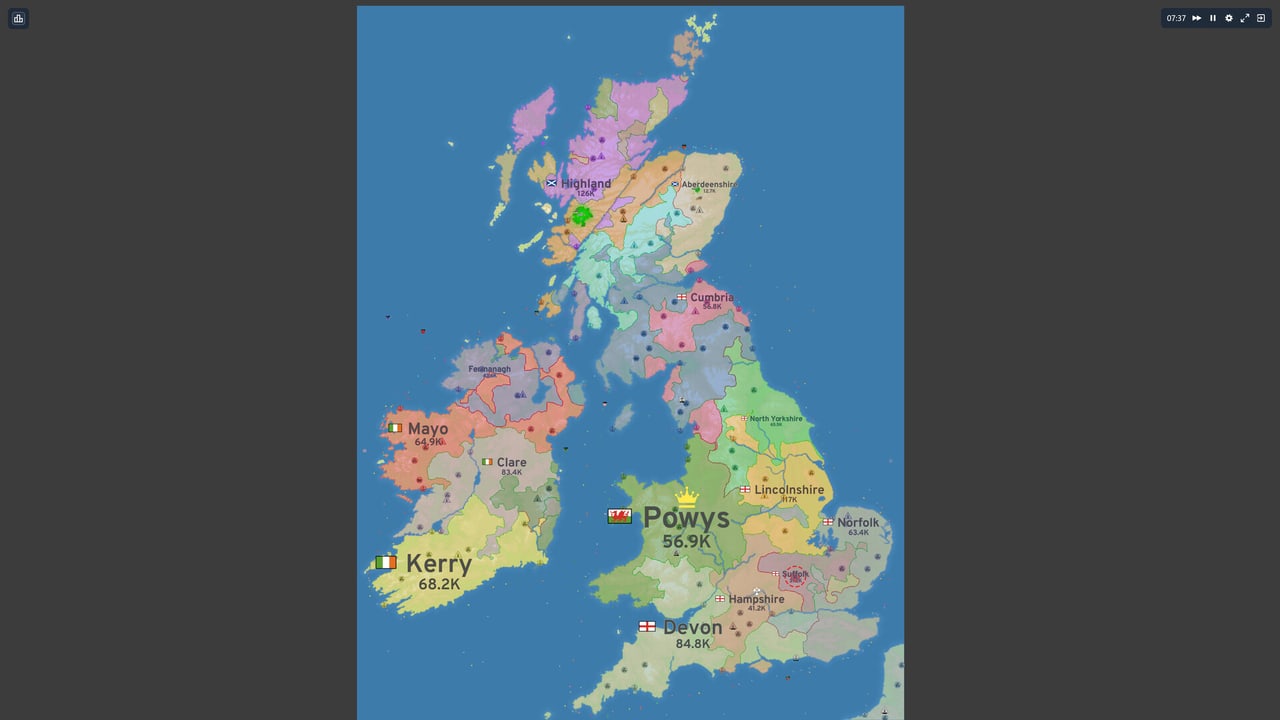
Team OpenFront is a shared win, not four solo FFAs with matching hats. Duos, Trios, Quads, and Ranked 2v2 all reward a clump, a frontliner, and a backliner who actually sends troops. If you still need spawn plains and the 42% rule, read Getting Started first. If you need the land-share win condition, read How to Play. This page is the team layer on top.
Spawn together
Teammates show a flashing circle in your color. Click land next to them, not the prettiest isolated pocket. A team that splits across a continent plays two losing FFAs. Prefer a shared plains bowl plus one coast so someone can Port. Ranked 2v2 gives 1 minute of spawn immunity and Compact maps 50% of the time; use the minute to take the same side of the compact map, not to greed opposite edges. Lobbies that do not fill or fully spawn cancel. Ranked prefers clanmates as partners when it can.
Doomsday Clock team games use the same timings as FFA but a higher territory ladder (3/6/10/15/21/28/35% as the community wave list). It is still not a shrinking circle. Expand as a color before the first wave.
Frontliner versus backliner
Frontliner. You share a border with the enemy color. Your job is to take land on time, not to own the prettiest City count. Get a few Cities and a Port if you have coast, then stop shopping when the fight is live. Attack when donations arrive, not when you feel bored. Keep enough troops that a counter does not delete the neck. A Defense Post on that neck (50,000, 30-tile zone, destroyed on capture) is a frontliner purchase; see Buildings. You rarely donate. You ping, you take, you live.
Backliner. You do not have the hot border, or you have a short one. Your job is gold, cap, and donations. Build Cities so your cap can grow, a Factory if a station is in range, Ports if you own a safe sea. Sit near the growth band, then send troops when you approach ~50% of cap so you are not wasting the 42% farm. There is a cooldown on donating to the same player; 30–40% of your troops per send is a common cadence when you support one frontliner. If you support two, smaller, more frequent sends beat one dump that leaves you empty.
Coastal backliners split attention: trade, a warship, and the occasional landing. Do not each buy a warship for the same bay; Naval is the fleet chapter. Missile backliners save for Silo plus Atom (1.75 million) and tell the front before they fire; Nukes is the net. FFA-style pacts with the other team are rare and dangerous; Alliances is the traitor timer if you still use them.
An ally’s Defense Post does not give you the defender bonus on your tiles. Own the neck you need. Donate gold when the frontliner is one City or one SAM short; donate troops when they are the one taking damage.
Troop donations without feeding a corpse
Open the radial menu on the ally and send troops at your attack-ratio percent, or use the donate-gold slider when they need a building. Watch their bar. If they are already near cap, your send is wasted growth. If they are at 10% and under attack, send now. If they spawned on the wrong continent, do not keep feeding a pocket that cannot be saved; take a new landing together instead.
Hotkeys still matter: number row for the next City, C to find yourself after you pan to the front, F only if you are the designated navy. Controls is the table. Chat SOS when the neck is real; do not SOS because you want to buy a Hydrogen.
Ranked 2v2 notes
Separate ladder tab. Clanmate preference. 1 minute PvP spawn immunity. Compact maps half the time. The match can end when a full team is dead or disconnected, so a solo hero play after your partner drops is often just a faster loss. Use the protected minute to establish a shared front: two Cities that can donate, one Port if the compact map has a sea, one agreed neck. Do not interpret immunity as permission to split. After the minute, the first team that donates into a real attack usually writes the rest of the game. Full 1v1 and 2v2 queue rules: Ranked.
Steam Early Access date is 17 September 2026 if you want the desktop client with offline and cross-play; Ranked 2v2 is already a web ladder. Browser play stays free on the official site.
The Guides Hub is every tutorial. The Tier List Hub is a short meta note on frontliner openings. The Updates Hub tracks ranked rules. Discord and GitHub live on the Links Hub.
Win the spawn, then win the send. A frontliner with three Cities and no donations is a solo player. A backliner at 90% cap with a Factory and a silent radial menu is a spectator. Stand on the same plains, pick one neck, and treat the cooldown on troop sends as part of the economy, the same way you treat the 42% growth band in FFA.
Frequently Asked Questions
Quick answers to the most common OpenFront questions.
Where should teammates spawn in OpenFront?
On the flashing same-color circle, sharing plains and if possible a coast. Splitting to “better” solo pockets is how Duos lose to a worse team that stayed together.
What does a frontliner do versus a backliner?
The frontliner takes the enemy border and spends donations on timed attacks. The backliner builds cap and gold, then donates troops on cooldown instead of sitting at a full bar.
How should I donate troops?
Send when the frontliner is fighting or recovering, not when they are already near cap. A common backliner cadence is 30–40% of troops per send whenever you near half of cap. Gold donations are for a missing City, SAM, or Silo.
What is different in Ranked 2v2?
Own ladder, clanmate preference, 1 minute spawn immunity, Compact maps 50% of the time, and an early end if a full team is dead or disconnected. Use the minute to make one shared front. Details: Ranked.
Does my teammate’s Defense Post protect my land?
No. The post bonus applies to defender-owned tiles in its 30-tile zone. Own the neck you need, or donate so the teammate who owns it can hold.
Is Doomsday Clock a shrinking circle in team games?
No. It is a rising territory-share test with a higher team ladder after a 10-minute grace period. Water still does not count. Expand as a color before the first wave.