OpenFront Tall vs Wide
When to stay compact, when to expand, and when territory is actually winning material.
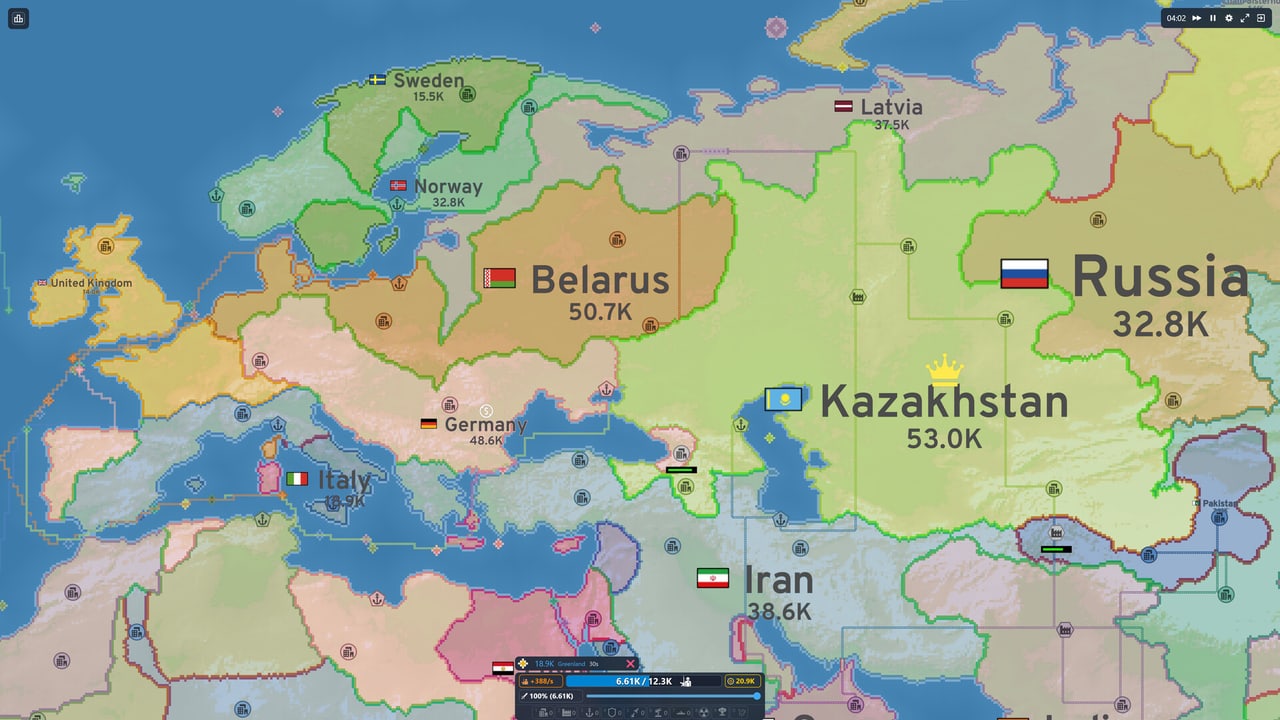
Decide when to stay compact and when to expand
The Tall vs Wide decision is about when territory is actually winning material versus when it is vanity that drains your military and attention.
Tall means building a compact, well-defended core with high infrastructure density. Wide means spreading across more tiles, more borders, and more exposure.
When to stay tall
Stay compact when:
- You have a short, defensible border around a valuable economic core
- Troop recovery is slowing because you are near cap
- A neighbor is applying pressure and every new tile creates another problem
- You are setting up a nuclear deterrent that needs集中 defense
A tall position lets you:
- Defend with fewer troops per tile
- Concentrate SAM coverage
- Respond faster to threats on any front
- Maintain a strong reserve for counterattacks
When to go wide
Expand when:
- Your core is secure and you have excess troops beyond a comfortable reserve
- The map has open land that does not create new neighbors
- You need land share to satisfy Doomsday Clock or Overtime requirements
- A rival is about to win and you need every percentage point
Wide expansion helps when:
- Doomsday Clock waves are approaching and you need more land share
- Overtime threshold is falling and you are below it
- You are in a race with another player for the 80% win condition
- You need neutral land to absorb the next nuclear strike
Test liquidity, access, need, and deadline
Before turning a compact core into a second foothold, check four things:
Liquidity: Can you afford the troop commitment without leaving the core vulnerable? If your reserve falls below what the strongest neighbor could exploit, stop.
Access: Can your troops reach the new land quickly enough to defend it? Thin corridors that can be cut leave you with isolated territory that cannot be reinforced.
Need: Does the new land solve a real problem? More tiles that all need defense is often worse than fewer tiles that are secure.
Deadline: Is there a clock forcing the decision? Doomsday waves and Overtime thresholds create artificial deadlines. Other situations usually do not.
The 42% rule and expansion
Troop growth peaks near 42% of cap. A large empire that sits near cap is growing slowly everywhere. A compact core that stays around 42% grows faster per tile.
When you expand, watch whether the new territory actually improves your growth rate or just adds to the denominator. If the new tiles require troops to hold, the net effect on growth may be negative.
Converting infrastructure into winning territory
Cities, Ports, and nuclear safety are investments in your economic base. Converting them into winning territory means spending the Gold and troops they produce on land that pushes you toward the 80% threshold.
Do not expand merely because you have infrastructure. Expand when the infrastructure produces enough surplus to fund expansion without weakening the core.
A City at 125,000 Gold adds 250,000 troop cap. That extra cap lets you hold more land without sacrificing growth. But if you use those extra troops to grab tiles you cannot actually defend, the City has not bought you a win.
Common mistakes
Expanding into a chokepoint: A thin corridor to valuable land looks like a good deal. It becomes a trap when an enemy cuts the neck.
Ignoring border shape: Wide positions with long, irregular borders are harder to defend than compact ones. Each bend is another place where pressure can build unnoticed.
Forgetting the reserve: Expansion that empties the army invites counterattack. Always leave enough troops to deter the strongest plausible neighbor.
Treating infrastructure as victory: Cities and Ports are tools for winning. They are not wins themselves. If your infrastructure does not translate into land or staying power, reconsider the build order.
Doomsday Clock and Overtime adjustments
In Doomsday Clock mode, land share is the win condition. This changes the calculation:
- Staying tall may fail the rising share test
- You need enough tiles to satisfy each wave threshold
- A compact 20% core that is safe may still doom you at wave 3
In Overtime mode, the 80% threshold falls. If you are below it, wide expansion may be necessary even if a tall position is more defensible.
Read the Overtime and Doomsday Clock guides for the exact thresholds and timing.
Frequently Asked Questions
Quick answers to the most common OpenFront questions.
What does Tall mean in OpenFront?
Tall means building a compact, well-defended core with high infrastructure density. You maximize the value of each tile rather than spreading across many.
What does Wide mean in OpenFront?
Wide means spreading across more tiles, more borders, and more exposure. You prioritize quantity of territory over density of defense.
When should I stop expanding?
Stop when the next expansion would create a border you cannot defend, when your reserve falls too low, or when the new land does not solve a real problem.
Does Doomsday Clock change the Tall vs Wide decision?
Yes. In Doomsday mode, land share is the win condition. A compact position may fail the rising share test even if it is militarily secure.
How does the 42% rule apply to expansion?
Growth peaks near 42% of cap. A large empire near cap grows slowly. A compact core at 42% grows faster per tile, so expansion that strains your reserve may actually slow growth.