OpenFront How to Pick the Best Spawn
Use OFstats.io, terrain counts, and three quick checks to choose a spawn that gives you a real chance.
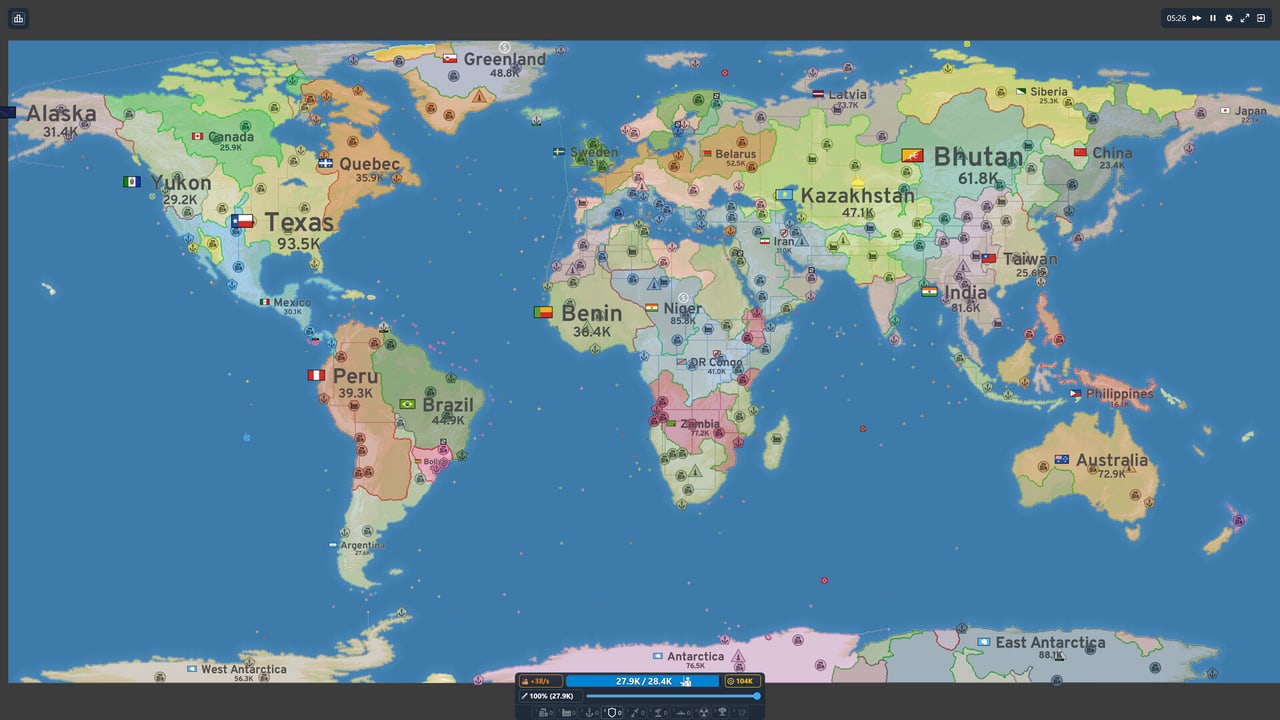
Most OpenFront players pick the wrong spawn. They click a country that looks pretty, or a flag they recognize, or a spot on the map that seems quiet. Then they spend the next twenty minutes fighting enemies on all sides while their economy never recovers.
This page fixes that. It gives you a 10-second checklist you can run before every public queue, using OFstats.io heatmaps and three in-game terrain checks. Source: the YouTube guide “Most Players Pick the Wrong Spawn” by an experienced OpenFront analyst.
Why Spawn Matters More Than Build Order
Your spawn sets the geometry of your entire game. A bad spawn means a long border with too many neighbors, no useful coast, and land that is expensive to take. No build order fixes that.
A good spawn means a compact territory, one or two expansion lanes, and a coast that actually matters. You can win with a mediocre build order on a good spawn. You cannot win with a perfect build order on a bad spawn.
The 10-Second Pre-Queue Check on OFstats.io
Before you queue, open OFstats.io/maps and check the map you are about to play.
Step 1: Read the Spawn Heatmap
The heatmap on OFstats shows where players most often spawn and where they win from. Look for:
- Cool zones — areas where fewer players spawn. Less competition for the same neutral land.
- Win corridors — routes from cool zones to the map center. A spawn that has a clean lane to the interior is worth more than a spawn in a crowded corner.
- Avoid the red — popular spawn clusters attract more early conflict. If five players always spawn on the same peninsula, that peninsula is a death trap even if it looks defensible.
Step 2: Count Land Masses
Smaller islands and disconnected land groups mean fewer expansion options and more naval dependency. Larger connected land masses mean you can grow without needing Ports first.
For your first games on an unfamiliar map, prefer larger connected terrain. Save the island maps for when you know how to value Ports before the first City.
Step 3: Check Coastal Access
Every useful coast touches the main trade network of the map. A coast on an isolated bay that requires a long sea detour to reach other players is worth less than a coast on the main ocean route.
In OFstats, cross-reference spawn positions with trade route density. A spawn near a narrow strait that controls both naval movement and trade is often worth more than a pretty beach on the map edge.
The Three In-Game Checks After Spawn
You cannot run OFstats after the match starts. Once you are in-game, use these three physical terrain checks before you click the first attack.
Check 1: Count Your Borders
Look at how many directions have a clear border with neutral land or enemy territory. A spawn with 4+ active borders is a multi-front war from minute one. A spawn with 1–2 active borders and the rest blocked by water or impassable terrain is a lane you can control.
The goal is a spawn with one primary expansion direction and one fallback direction. Everything else is either water or mountain wall.
Check 2: Find the Neck
A neck is a narrow strip of land between two water bodies or impassable terrain features. Controlling a neck early gives you a defensive advantage because enemies must attack through a chokepoint.
If your spawn puts you next to a natural neck, you can place a Defense Post there for 50,000 gold and hold the entire region. If your spawn puts you on the wrong side of someone else’s neck, turn around and expand the other way.
Check 3: Evaluate the Coast-to-Land Ratio
A useful coast for Ports and Trade Ships is one where the water is connected to the rest of the map. A decorative strip of coastline on an isolated bay that dead-ends into mountains is not a real naval asset.
If you spawned inland, do not force a Port. Build Cities and Factories instead and win through land economy. If you spawned on a real coast, protect that water with a Port before you protect the land.
Common Spawn Mistakes
Mistake 1: Picking the Famous Country
World map players often spawn on Russia or North America because they recognize the shape. Both are excellent territories, but they are also the most popular spawns on that map. The heatmap on OFstats confirms this: Russia and North America carry more early-game traffic than any other spawn on the World map.
A B-tier spawn with no competition beats an S-tier spawn where three players are fighting for the same neutral land.
Mistake 2: Avoiding Mountains Entirely
Mountains are expensive to attack and hold. But a mountain range that forms a natural wall on three sides of your spawn is an asset, not a problem. It means those three directions are permanently secure and you only need to defend one side.
Learn to distinguish between a mountain spawn (bad — you are stuck paying mountain prices) and a mountain border (good — the mountain protects you).
Mistake 3: Choosing Water You Cannot Use
A coast that touches a large body of water but has no nearby land connection to the interior forces you to ship troops across the sea to participate in the main land war. This is slow and expensive.
Before committing to a coastal spawn, trace the shortest land route from your coast back to the map center. If that route is blocked by enemy territory or impassable terrain within the first three tiles, the coast is not useful for the main game.
Spawn on Different Map Types
Continent Maps (World, Pangaea, United States)
Large connected land masses reward City and Factory strategies. Spawn on plains that connect to the interior. Avoid the map-edge peninsulas unless you have a clear naval fallback.
Island Maps (Oceania, Japan, Britannia)
Naval is mandatory. Spawn on the largest island with the most coastline. OFstats heatmaps on island maps show which islands produce the most winners. Follow them.
Compact Maps (Gibraltar, Las Vegas Strip)
Every spawn is close to every other spawn. The 10-second OFstats check is especially valuable here because the margin between a good and bad spawn is razor-thin. Check heatmaps, then check them again.
Impassable Terrain Maps (United States, Tierra del Fuego)
The blocked tiles change which routes are legal. Read the map with Space before you commit. An impassable mountain belt that looks like a discount mountain spawn is actually a wall that cuts your expansion options to one or two routes.
Quick Reference
| Check | What to Look For | Red Flag | | --- | --- | --- | --- | | OFstats heatmap | Cool zone with win corridor | Crowded red zone | | Land mass size | Large connected terrain | Small isolated islands | | Border count | 1–2 active directions | 4+ open fronts | | Neck | Natural chokepoint near spawn | No defensive terrain | | Coast | Connected to main trade network | Isolated bay with no route |
Next Steps
After you have a working spawn routine, deepen it with the First Match guide for the 60-second opening checklist, or with Buildings for the City and Port shopping list that follows a good spawn decision. The Map Archetypes page shows which maps reward which spawn styles.
Frequently Asked Questions
Quick answers to the most common OpenFront questions.
How do I check spawn statistics before queuing?
Open OFstats.io/maps and select your map. The heatmap shows where players most often spawn and win from. Look for cool zones with a clean corridor to the map center.
How many borders should a good spawn have?
One or two active expansion directions is ideal. Four or more open fronts means a multi-front war from minute one. Natural walls (mountains, water, impassable terrain) on other sides are assets, not problems.
Should I always spawn on a coast?
Only if the coast connects to the main trade network. An isolated bay coast forces you to ship troops across the sea to participate in the land war, which is slow and expensive. Inland spawns work fine with City and Factory.
Why should I avoid the famous countries on World map?
Russia and North America are popular spawns because they are recognizable. That popularity means more early competition. A B-tier spawn with no neighbors beats an S-tier spawn where three players fight for the same neutral land.
What is a neck in OpenFront spawn strategy?
A neck is a narrow land strip between two water bodies or impassable features. Controlling a neck early with a Defense Post (50,000 gold, 30-tile coverage) lets you hold an entire region from one chokepoint.